Project Overview #
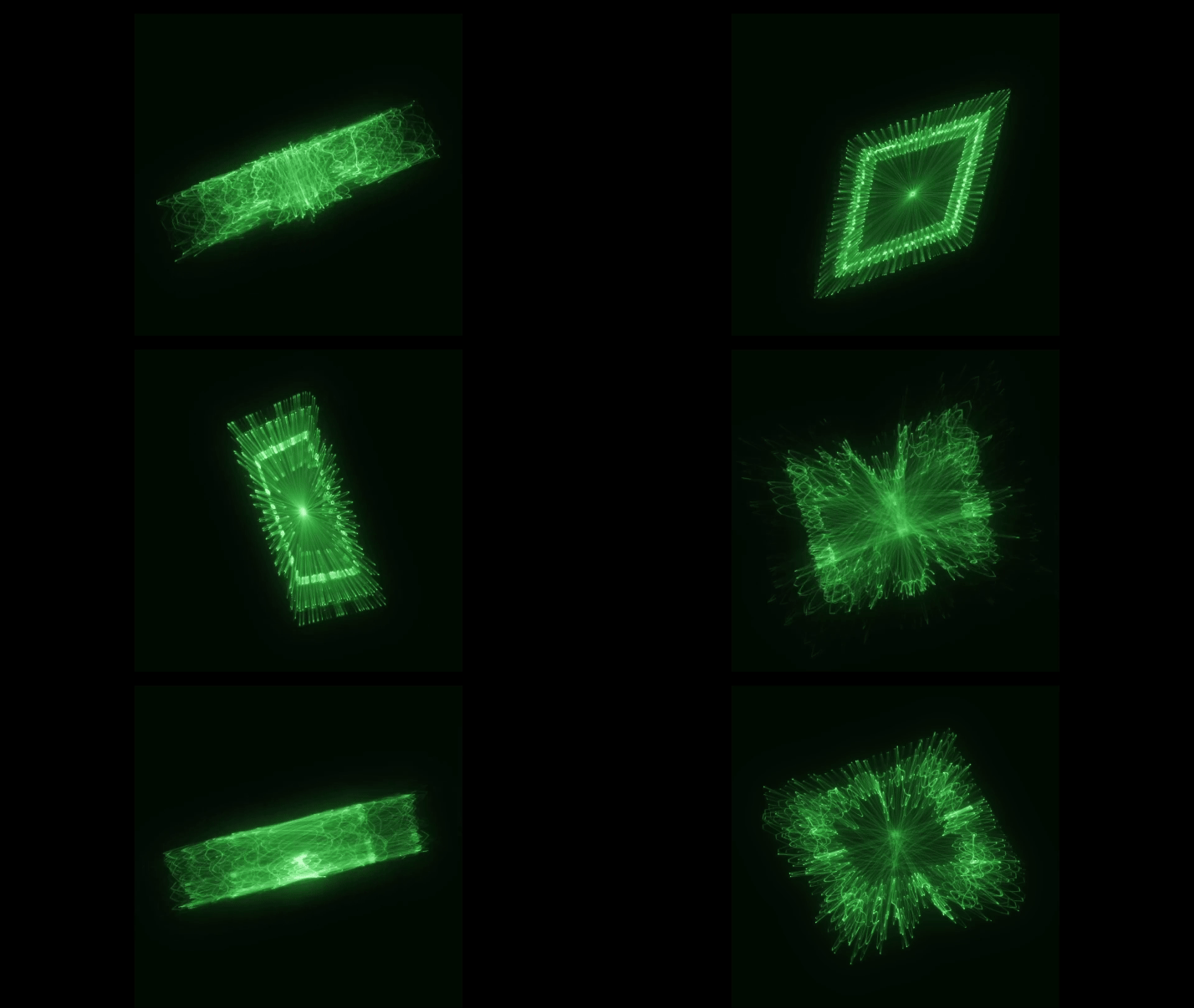
This project is exploring the relationship between oscilloscope art and sound design. I am interested in ways to manipulate visuals using oscilloscope art using a program called OsciRender and sound. I eventually want to experiment with interactions using OsciRender, OSC protocol to allow ways to send sound from the DAW to Osci Render to allow audiences to participate with visuals but that will be explored once I have the connections I need. So I am going to begin with just manipulating OsciRender with Blender as they have good integration and you can bring in 3D animation into the artwork, but later I want to hook up Touch Designer to to this project to allow for more creative control, allowing introduction of glitch visuals and sound through OSC from Logic or Ableton.
Oscilloscope art has a distinct aesthetic that blends retro-futurism, glitch aesthetics, and scientific visualisation. The idea of using sound as a direct manipulator of shape and motion is fascinating - sound literally becoming the visual element.
Phase 1: Exploring OsciRender in Blender
To start, I will focus on manipulating OsciRender within Blender, since the two integrate well. Blender’s animation and shading systems allow for 3D movement and distortions, adding another dimension to the traditionally 2D oscilloscope visuals. This phase will focus on: . Learning OsciRender’s waveform rendering techniques . Creating simple animated shapes using Blender’s modifiers . Experimenting with sound-generated waveforms to drive movement
Phase 2: Expanding to TouchDesigner and OSC
Once I have a solid foundation in OsciRender and Blender, I will begin experimenting with TouchDesigner, an environment that excels at real-time visual manipulation. The goal is to integrate OSC (Open Sound Control) into the workflow, allowing dynamic interaction between sound and visuals in real time. Potential avenues for exploration include: . Using OSC to send data from a DAW (Logic Pro/Ableton) to TouchDesigner . Introducing glitch aesthetics and generative visual distortions . Developing interactive elements where an audience can influence the visuals through sound