Project Overview #
I’m continuing my exploration of audio synthesis using the Arduino Uno and the Mozzi library, pushing the boundaries of what a simple microcontroller can achieve in sound design. My goal is to create a portable synthesis module that not only generates sound but also reacts to its environment in surprising and creative ways.
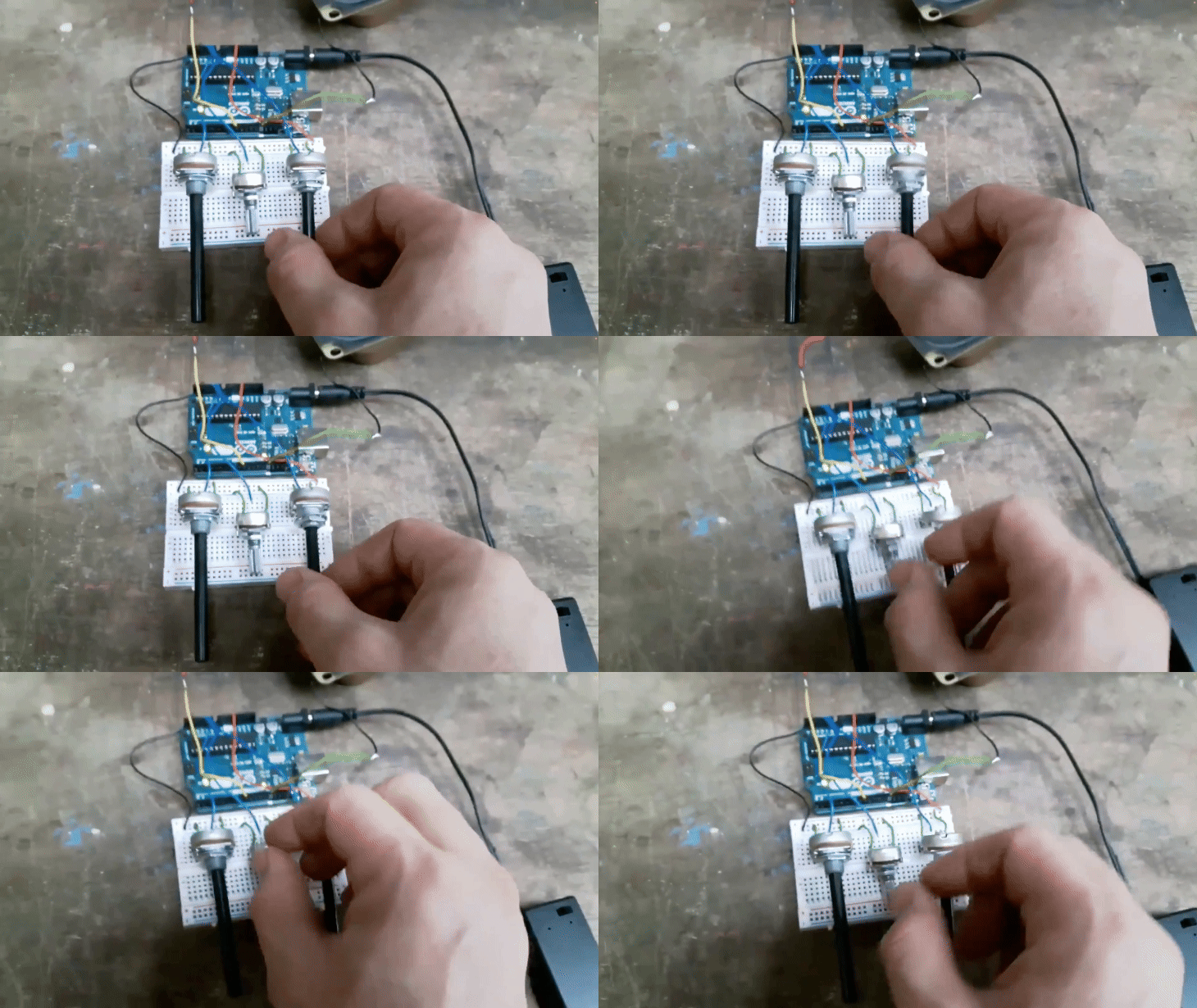
The initial experiment, where I connected three potentiometers on a breadboard, was just the start. It proved that the Arduino Uno, with minimal hardware, could produce responsive audio signals. The potentiometers offered real-time control over sound parameters, and this hands-on manipulation felt like an analog synth in its most stripped-down form.
With the Mozzi library, I’m now diving into more advanced audio synthesis techniques. The library’s flexibility opens up a world of possibilities, from generating waveforms to creating complex modulation patterns. I’m particularly excited about using Mozzi’s ability to process sensor input. This means I can connect environmental sensors - microphones, light sensors, or even motion detectors - and use the incoming data to shape the sound.
The idea of a sound module that reacts to its surroundings aligns perfectly with my fascination for blending natural, mechanical, and hidden information layers. Imagine a device that transforms the hum of a radiator, the rhythm of passing traffic, or the whisper of tree leaves into generative soundscapes. By integrating environmental sensory input, the module could create evolving audio that reflects the changing conditions around it.
Moving forward, I’ll experiment with different sensors and refine the synthesis algorithms. The ultimate goal is to craft a portable, adaptive instrument that could be used in both sound design projects and live performances. I’m looking forward to sharing the next steps as I prototype this ambitious idea, combining the tactile immediacy of Arduino hardware with the sonic depth of the Mozzi library.