Introduction #
Summary: This post explores the initial stages of synthesis development using an Arduino Uno and the Mozzi library. By connecting three potentiometers on a breadboard, I tested sound generation capabilities and laid the groundwork for portable synthesis modules. This experiment aims to merge environmental sensory input with generative sound synthesis, drawing inspiration from the layers of natural, mechanical, and hidden information present in our surroundings.
Content:
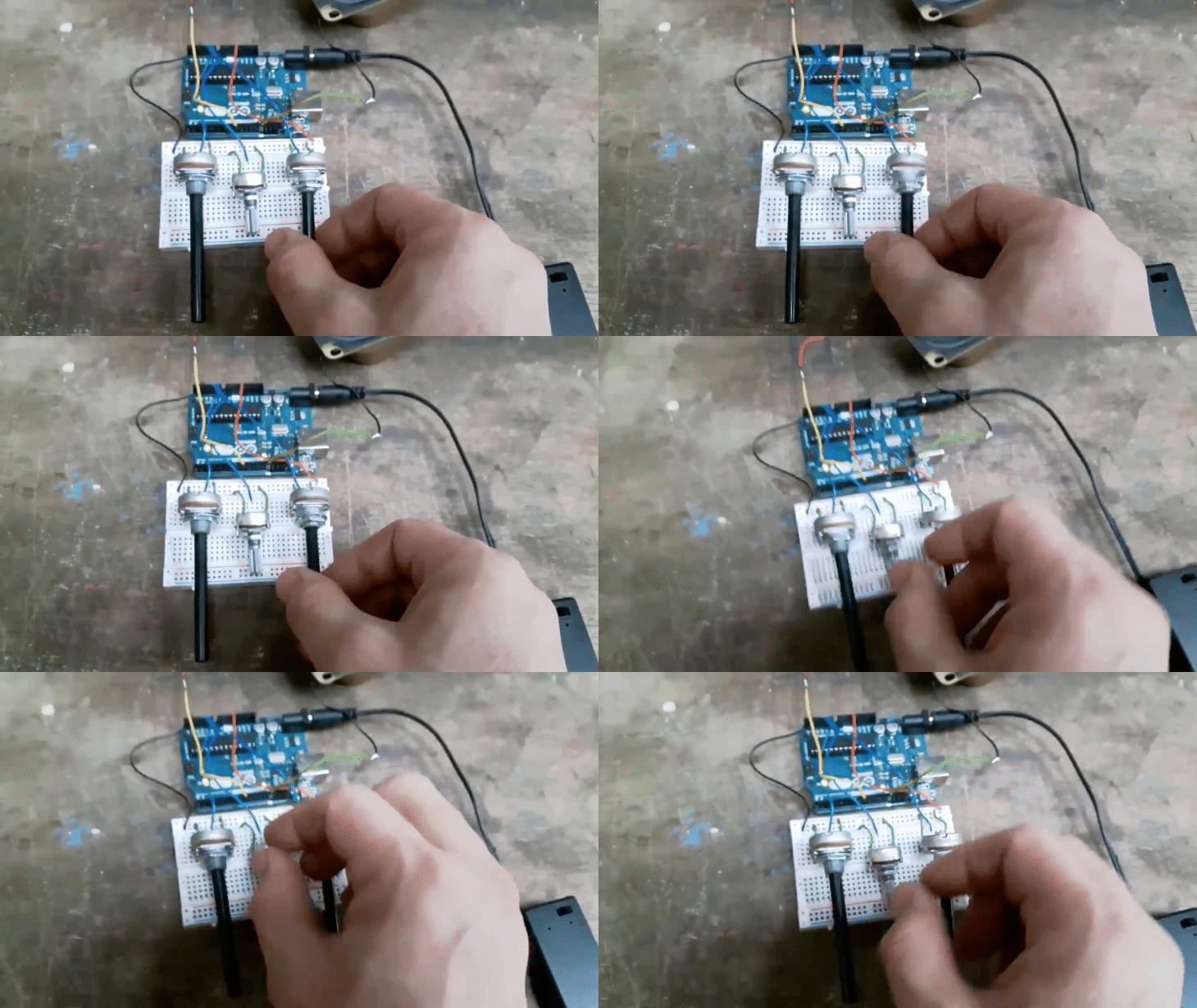
In this experiment, I set up an Arduino Uno for synthesis development using a combination of stock components and found materials. My goal was to test the basic sound generation capabilities of the system and establish a foundation for future development.
The Setup
Using a breadboard, I connected three potentiometers to the Arduino. Each potentiometer served as a control for different aspects of sound generation, allowing for real-time manipulation. This basic setup demonstrated that the Arduino Uno could produce responsive audio signals with minimal hardware.
Next Steps with the Mozzi Library
With this initial test complete, I’m delving deeper into the Mozzi library, a powerful tool for audio synthesis on microcontrollers. The library will allow for more complex sound design, enabling the creation of portable synthesis modules that can react to various stimuli.
Exploring Generative Soundscapes
One of my key interests is to explore how the built environment, with its layers of natural and mechanical sounds, can influence generative audio synthesis. By incorporating sensors to capture auditory, visual, and hidden data from the environment, I aim to create a sound-sensing module. This module will not only respond to ambient stimuli but also allow for intentional manipulation, resulting in unique generative soundscapes.
This experiment is the beginning of a journey into portable, adaptive synthesis. I look forward to sharing updates as I refine these ideas and integrate more sensory elements into the design.